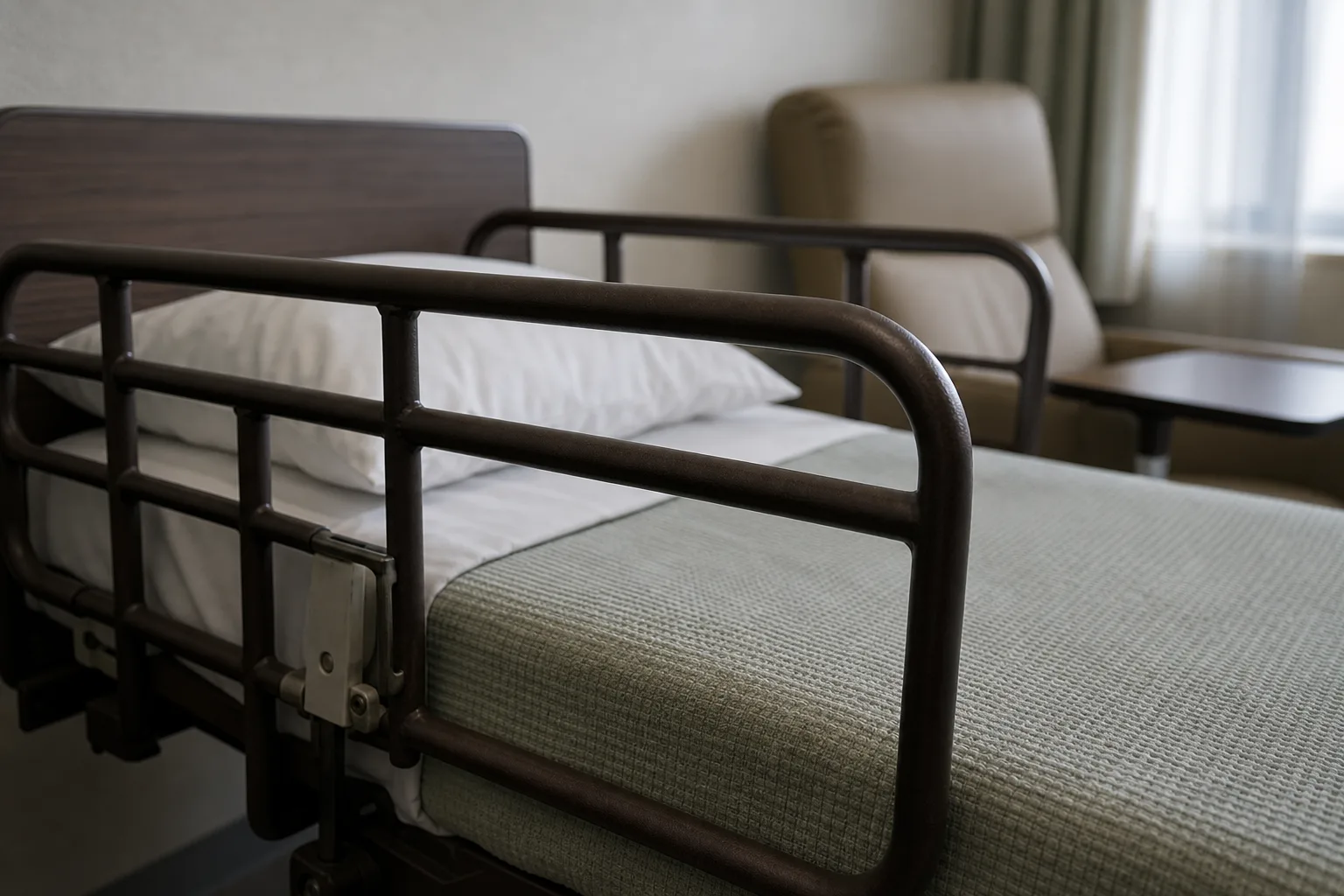
A family that has just found a stage three pressure sore, or watched a parent come back from the hospital with a fractured hip nobody can explain, generally reaches for whichever number is printed on the wall. That is not a bad instinct, but the four available channels are not versions of the same thing. They have different investigators, different timetables, different powers of compulsion, and different consequences for the relationship with the people who will be bathing your mother tomorrow morning. Choosing badly rarely closes a door permanently. It does, reliably, cost time.
The facility's own grievance process
Every certified nursing home has a written grievance procedure and a designated grievance official, and the fastest response you will get anywhere comes from using it. Put the complaint in writing, date it, ask for a written response, and keep a copy. The cost here is not money; it is candor and leverage. The facility now knows what you know, which means the care plan may be revised, staffing on that hall may quietly change, and the incident report may be written with your letter in mind. That cuts both ways. It also creates a dated record that the facility was told.
What the grievance process can force is narrow. It can produce a meeting, a care plan conference, a room change, a different aide assignment, sometimes an apology and a credit. It cannot compel the facility to admit anything, cannot fine it, and cannot make it produce records it would rather not produce. Treat it as the cheapest and fastest of the four, useful for problems that are still fixable: missed showers, a call light nobody answers, medications given late, a roommate who is dangerous.
The long-term care ombudsman
Every state runs a long-term care ombudsman program, and local ombudsmen visit facilities, take complaints, and advocate for residents. The distinguishing feature is consent: the ombudsman works for the resident, follows the resident's stated wishes, and holds the complaint confidential unless the resident authorizes disclosure. That confidentiality is the point and also the limit. An ombudsman can appear at a care plan meeting, press an administrator, resolve a dispute over a discharge notice, and explain what the rules actually require. An ombudsman cannot issue a citation, impose a penalty, or subpoena a record.
Cost is low in dollars and low in friction, which is why it is frequently the right first call when the resident is still in the building and afraid of retaliation. Response is usually measured in days rather than months. The tradeoff is that resolution depends on persuasion, and persuasion works on problems the administrator can fix without admitting fault.
The state survey agency
Each state has a survey agency that inspects nursing homes under an agreement with the federal government, and the Centers for Medicare and Medicaid Services is responsible for the certification standards those surveyors enforce. A complaint filed here triggers an investigation with real teeth: unannounced entry, record review, staff interviews, and, if deficiencies are found, a statement of deficiencies, a required plan of correction, and potentially civil money penalties or a denial of payment for new admissions. Timing varies by the severity assigned to the complaint. Immediate jeopardy allegations move in days. Lower-level complaints can sit for weeks or be folded into the next standard survey.
The cost is control. Once you file, the investigation belongs to the state, not to you. Surveyors decide what to look at, they may substantiate a different violation than the one you reported, and they may find nothing citable even where something plainly went wrong, because the regulatory question is whether the facility met a standard, not whether your father was harmed. What you get in return is a public, written finding that a private complaint never produces.
A civil lawsuit
The lawsuit is the only one of the four that can put money in a resident's or an estate's hands, and the only one with subpoena power over the records the other three have to ask nicely for. It is also the slowest and the most expensive in attention, running from a year to several depending on the venue, the defendant's insurer, and whether an arbitration agreement is in play. Most abuse and neglect cases are taken on contingency, so the out-of-pocket cost at the outset is usually an hour of a lawyer's time. Screening is done by a Personal Injury Lawyer who will want the chart before saying yes.
The real cost is the clock. Every state sets a statute of limitations, some of them short, some with separate and shorter deadlines for claims against government-run facilities, and a survey complaint that takes four months to resolve does not stop that clock from running. Filing a grievance or calling the ombudsman while you decide is sensible. Waiting for either to finish before you talk to a lawyer is how families discover their deadline passed.
Running them together
All four can proceed simultaneously, and in serious cases they usually should. A survey citation is not binding proof in a courtroom, but it is a dated, official account written by people with no stake in your case, and it names the staff who were interviewed. The ombudsman keeps the resident protected while the rest grinds forward. The grievance letter establishes notice. Nothing you file with the state waives a claim, and nothing you tell a lawyer prevents you from also calling the ombudsman that afternoon.
The sequencing that costs the least is generally the simplest: write the grievance today, call the ombudsman today, file with the survey agency this week, and get the chart requested and reviewed before any deadline is close. Each channel reaches something the others do not, and the family that uses all four ends up with the fullest record of what happened.